Why Grow Goumi Fruit Seeds
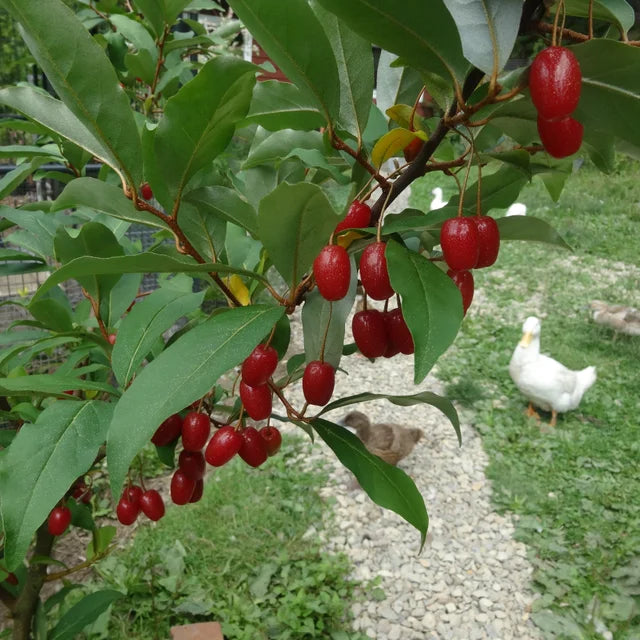
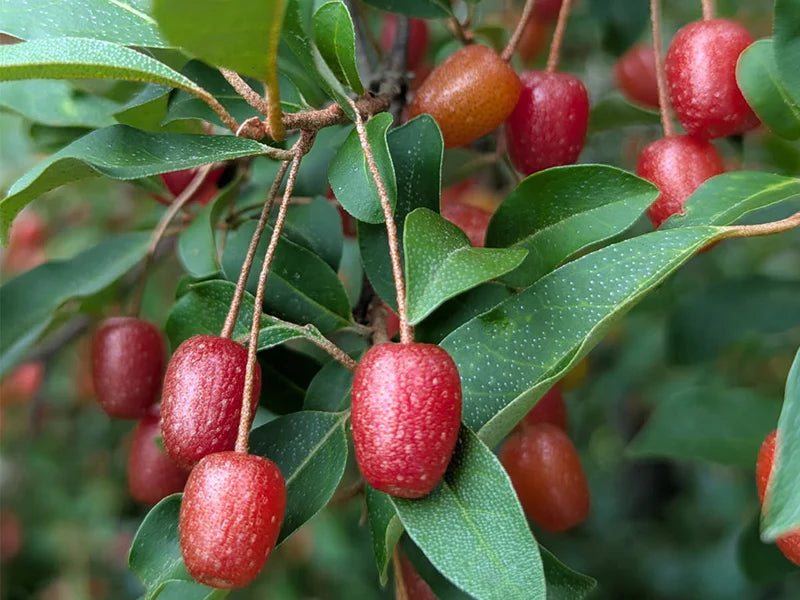
Goumi is one of those quietly excellent shrubs that more home orchards and food forests could use. Grown from seed, it develops into a rounded, deciduous shrub with dark green leaves that flash a shimmery silver underside in the breeze, fragrant pale flowers in spring, and clusters of speckled red berries by summer that ripen to a sweet-tart flavor genuinely worth waiting for.
What makes Goumi especially practical is its self-sufficiency. As a nitrogen-fixing plant, it partners with soil bacteria to produce its own fertilizer, meaning it needs very little feeding to thrive — and it tolerates poor soil, drought, and a range of growing conditions that would challenge fussier fruiting shrubs. For gardeners building a low-input food forest or edible landscape, it's a genuinely useful addition.
Ila Seeds carries fresh Goumi Fruit seeds for patient gardeners ready to take on this rewarding, if slow-starting, shrub.
What to Know Before Planting Goumi Fruit Seeds
Germination Genuinely Takes Patience — This is worth knowing upfront: Goumi seeds are notoriously slow to germinate, commonly taking 1 to 2 years even under good conditions, and stored (rather than truly fresh) seed can take even longer. This slow germination is exactly why most experienced growers and nurseries actually propagate Goumi from cuttings rather than seed. Growing from seed is entirely doable, just genuinely not a quick process.
Fresh Seed Germinates Better — Seed that's never been dried out and is sown as soon as it's ripe, or kept consistently moist in the meantime, germinates more reliably than seed that's been allowed to fully dry.
Mostly Well-Behaved, With a Caveat — Unlike some of its more aggressive Elaeagnus relatives (like Autumn Olive, which is regulated as invasive in parts of the US), Goumi is generally considered non-invasive. That said, at least one horticultural source notes it can self-seed and show mild invasive tendencies in certain parts of the US, so keeping an eye on volunteer seedlings nearby is a reasonable precaution.
Eat Only Fully Ripe Fruit — The berries are notably astringent if eaten before they're fully ripe. Wait until they're a deep, glossy red and slightly soft before harvesting for the best flavor.
Gardening Insights: Growing Goumi From Seed
Sunlight: Full sun to partial shade both work well, with full sun generally producing the best fruit set.
Soil: Goumi tolerates sandy, loamy, and clay soils alike, and even nutritionally poor ground, as long as drainage is decent. Avoid consistently wet, poorly drained sites.
Starting seeds: Use fresh seed whenever possible, and give it a warm stratification period of about 4 weeks followed by roughly 12 weeks of cold stratification to help break dormancy. Sow in a cold frame or protected outdoor spot, and be prepared for a genuinely long wait — germination can take up to 18-24 months, occurring in late winter or early spring once it finally happens.
Timing: Sow seed as soon as it's ripe in mid to late summer for the best results, letting it go through a natural winter stratification outdoors, or replicate that stratification process indoors if starting later.
Care once established: Water regularly while young, then ease off once mature, since established plants are genuinely drought-tolerant. No fertilizer is generally needed thanks to the plant's nitrogen-fixing ability. Prune lightly after fruiting to shape and control size, and monitor for volunteer seedlings nearby if self-seeding is a concern in your area.
Frequently Asked Questions
How long do Goumi seeds take to germinate?
Goumi seeds are notoriously slow, commonly taking 1 to 2 years to germinate even under good conditions, with stored (non-fresh) seed sometimes taking longer. This is why most growers propagate Goumi from cuttings rather than seed.
Is Goumi invasive?
Goumi is generally considered non-invasive, unlike some related Elaeagnus species. That said, at least one horticultural source notes it can self-seed and show mild invasive tendencies in certain parts of the US, so monitoring for volunteer seedlings is a reasonable precaution.
Does Goumi need fertilizer?
Generally no. Goumi fixes its own nitrogen through a symbiotic relationship with soil bacteria, meaning it needs little to no supplemental fertilizer to thrive.
Can Goumi berries be eaten right away?
Only once fully ripe. The berries are notably astringent if eaten before they're fully ripe, so wait until they're deep red and slightly soft for the best flavor.
Where can I buy Goumi Fruit seeds online?
Ila Seeds carries fresh Goumi Fruit (Elaeagnus multiflora) seeds for patient home gardeners. Browse the collection and we ship straight to your door.


 100% Organic Heirloom